petrichor
Vocabulum pluviae-superbum
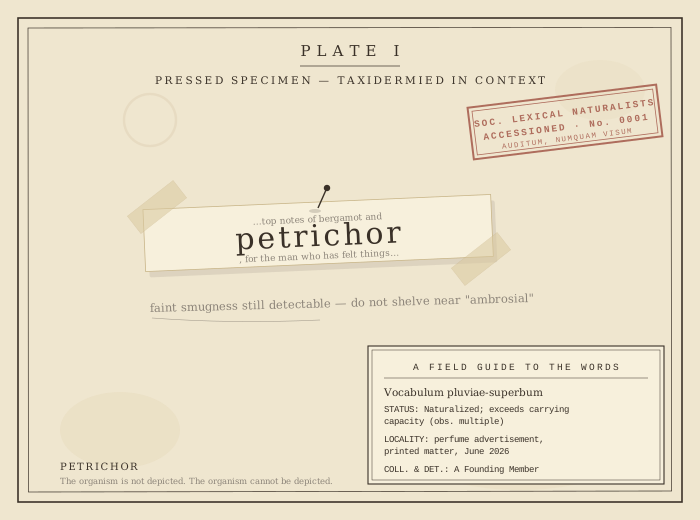
Description
A mid-sized sensory noun of unusually well-documented origin: bred in captivity by two Australian researchers in 1964, from Greek stock (petra, stone; ichor, the fluid in the veins of gods), for the specific purpose of naming the smell of rain on dry ground. It is among the very few words whose hatching was recorded in a peer-reviewed journal (Nature, 7 March 1964), making it a rare specimen of successful captive breeding followed by deliberate release.
The organism is notable for its plumage-to-payload ratio. It carries one modest meaning in an unusually ornate body, a trait that has made it beloved of collectors and suspicious to working writers.
Status
Naturalized. Escaped the technical literature in the late twentieth century via science journalism and is now established across all English-speaking territories. Several regional observers report the population has exceeded carrying capacity; see Marginalia.
Range
Breeds year-round in poetry, perfume marketing, and dating profiles, where it displays. Winters in trivia. Strays have been recorded in weather broadcasts and at least one prestige-television monologue. Conspicuously absent from actual meteorology, which prefers the unglamorous native species humidity and convection.
Call
Three syllables, trochaic onset, stress on the first: PET-ri-chor. A faint smugness is audible in most field recordings, particularly when the organism is produced immediately after rain in the presence of an audience. Juveniles are sometimes heard with a soft ch (as in church); the Society regards this as a regional dialect rather than an error, over the strong objection of one founding member.
Sign
Distinctive. A text the organism has passed through will show: (1) a nearby rain event, (2) a slight rise in the register of the surrounding sentences, as if they have straightened their posture, and (3) the displaced tracks of the older native phrase the smell of rain, which it outcompetes for the same niche despite being, by weight, less nutritious.
Easily Confused With
Actually having smelled the rain. The two co-occur less often than the organism’s frequency would suggest. In the field, the reliable distinguishing mark is direction of attention: the experience points at the ground; the word points at the speaker.
History of Classification
Unlike most species in this guide, whose lineages must be reconstructed from fossil spellings, petrichor has papers. Bear & Thomas, 1964, working from the oils that dry earth absorbs from plants and releases in rain. The Society notes with approval that the word for the smell was created by the people who isolated the chemistry — a rare case of the poets and the scientists being the same individuals, which may account for the organism’s hybrid temperament: laboratory bones, ornamental feathers.